Nikken Kenko Sleep System
Kenko™ Sleep System
Few things can make you feel better than a good night’s sleep. And few things have as powerful an influence on our lives and
health. Sleep restores and recharges us, keeps us healthy, and can even affect medical conditions such as diabetes and weight
gain. Fortunately, Nikken has developed advanced sleep technology that helps you stay healthy and get the rest you need.
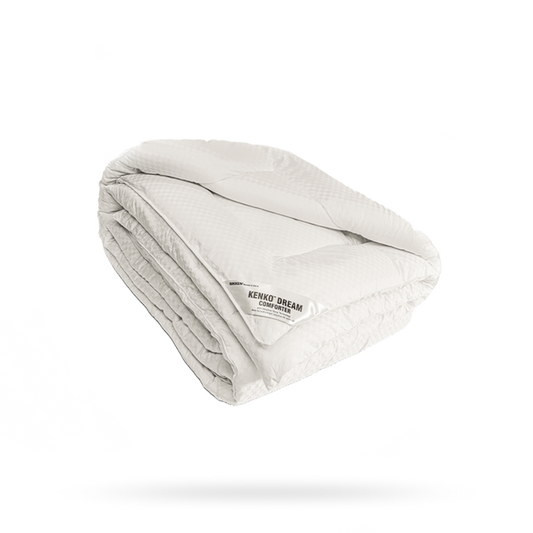
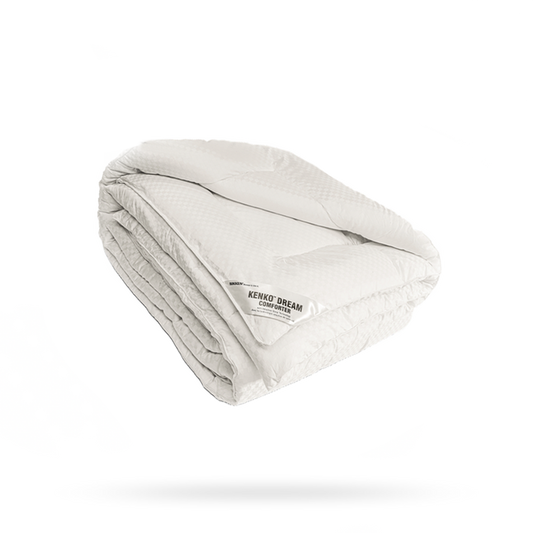
The Kenko Sleep System is scientifically designed for better sleep. Innovations including Nikken RAM™ (radial-axis magnetism)
Technology, a massage-effect surface, natural temperature regulation and more, provide you with an extraordinary sleep
experience.
What do you know about sleep?
Popular misconceptions
A good deal of what we have heard about sleep and health is the result of myth or misinformation. Some of the prevailing ideas regarding sleep may even be dangerous. Here are some common beliefs about sleep, and the truth behind the stories.
Snoring may be an annoyance but it is harmless.
This may be true for most people, but sometimes snoring is a symptom of a disorder known as sleep apnea. This condition interrupts breathing during sleep. Sufferers of sleep apnea frequently snore, and in severe cases awaken several times during the night out of breath. Sleep apnea may have serious consequences. Snoring may also be associated with obesity, which can obstruct the airway.
Chronic snorers, especially those whose snoring is interrupted, should be examined by their physician to ensure that their nighttime noise is not caused by a potentially life-threatening problem.
A full night’s sleep is recommended but you can get by on less.
Sleeping less than the amount you need not only makes you tired, it can be harmful to your health. Obesity, high blood pressure, depression, lowered productivity and mental alertness, even safety hazards are the consequences of too little sleep.
If you get sleepy while driving, you can help stay awake by turning up the radio or opening the window.
These tactics can fool you; they may provide a momentary boost to alertness but a tired body soon stops noticing these stimuli, and you’re nodding off again. A more appropriate response to sleepiness while driving is to pull off the road in a protected area and take a nap, for at least 15 minutes. Even that is only a temporary measure. The only safe means of preventing the danger of drowsy driving is prevention: plenty of sleep the night before.
Adolescents are grown up enough to sleep the same number of hours that adults do.
The teen who gets sleepy in class is not showing signs of laziness or inattention. Sleep experts report that adolescents require more sleep than the average adult — at least 8-1/2 to 9-1/2 hours every night, compared to 7 to 9 hours for a typical 30-year-old. One problem is that teenagers’ biological clocks are close to the adult rhythm, keeping them awake later in the evening and sleeping later in the morning hours. Because many schools begin classes in the early morning, these students may be chronically deficient in the sleep they need.
You don’t have insomnia if you don’t have trouble falling asleep.
Difficulty falling asleep is but one of four symptoms associated with insomnia. The others include waking up too early and not being able to fall back asleep, frequent awakenings, and waking up feeling unrefreshed. Any of these types of insomnia may be a symptom of a sleep disorder or of another medical problem.
Health problems such as obesity, diabetes, hypertension, and depression are genetic or lifestyle issues, not related to sleep.
To the contrary, scientific studies have found a link between sleep and many health problems. For example, insufficient sleep affects the production of growth hormones related to weight maintenance. Cardiovascular problems, the potential for developing diabetes, and other disease states appear to be connected to poor sleep.
When you get older, you need less sleep.
It is the sleep pattern that seems to change as we get older, not the amount of sleep we need. Older people may wake more frequently through the night, but they tend to take more daytime naps.
Sleep is the time for your brain to rest.
In fact a great deal of mental activity takes place during certain stages of sleep. There are multiple stages in each 90-minute sleep cycle. Even in the deepest part of each cycle, the brain is processing information or dreaming. Scientists are still not sure why we dream, but it is known that the periods of brain activity serve a vital restorative function.
If you wake up in the middle of the night, try to count sheep or use some other way to get back to sleep.
If you’ve ever awakened and told yourself you have to get back to sleep, you know how impossible this is. If you’re waiting to fall asleep and it doesn’t happen after about 15 minutes, you may want to get out of bed and find something relaxing to do. This may help you feel sleepy again, and then you can go back to bed.
Source: National Sleep Foundation
The dangers of poor sleep: the numbers
Based on research and surveys conducted by the National Sleep Foundation, National Commission on Sleep Disorders Research, National Institutes of Health, National Highway Traffic Safety Administration
* Average amount that Americans sleep per night on weekdays: 6.9 hours
* Average amount that Americans sleep per night on weekends: 7.5 hours
* Number of people in the United States affected by a sleep problem: 70 million
* Number for whom the problem is chronic and/or frequent: 40 million
* Financial losses in the US due to sleep deprivation/disorders: $100 billion per year
* Direct healthcare costs of insomnia, including treatment: $14 billion per year
* Indirect costs (missed work, property damage, etc.): $28 billion per year
* Proportion of Americans who report sleep problems: approximately 70%
* Proportion of children who report frequent sleep problems: 69%
* Proportion of older adults who report frequent sleep problems: 67%
* Number of automobile accidents caused by drowsy drivers: 100,000 per year
* Number of fatalities and injuries in these accidents: 72,500 per year
* Proportion of Americans who admit to have driven while drowsy: 51%
* Proportion who admit to have dozed off while driving: 17%
Source: National Sleep Foundation
The dangers of poor sleep: the numbers
Based on research and surveys conducted by the National Sleep Foundation, National Commission on Sleep Disorders Research, National Institutes of Health, National Highway Traffic Safety Administration
* Average amount that Americans sleep per night on weekdays: 6.9 hours
* Average amount that Americans sleep per night on weekends: 7.5 hours
* Number of people in the United States affected by a sleep problem: 70 million
* Number for whom the problem is chronic and/or frequent: 40 million
* Financial losses in the US due to sleep deprivation/disorders: $100 billion per year
* Direct healthcare costs of insomnia, including treatment: $14 billion per year
* Indirect costs (missed work, property damage, etc.): $28 billion per year
* Proportion of Americans who report sleep problems: approximately 70%
* Proportion of children who report frequent sleep problems: 69%
* Proportion of older adults who report frequent sleep problems: 67%
* Number of automobile accidents caused by drowsy drivers: 100,000 per year
* Number of fatalities and injuries in these accidents: 72,500 per year
* Proportion of Americans who admit to have driven while drowsy: 51%
* Proportion who admit to have dozed off while driving: 17%
Source: National Sleep Foundation
Sleep questions and answers
How important is sleep for my health?
How much sleep does a person need? How do I know if I am getting enough?
Can a mattress or sleep system make a significant difference in sleep quality?
Can people make up for lack of sleep by sleeping more on weekends?
Does exercise keep me awake?
What are some ways to get a better night''''''''s sleep?
Q. How important is sleep for my health?
A. Many medical professionals believe that sleep is the most basic component of good health, and that poor sleep can contribute to various medical problems and even shorten lifespan.
On a physical and mental level, sleep is when the body and mind are restored and reenergized. This is one reason why people who are ill tend to sleep more; their systems are undergoing a process of repair. In addition to the obvious physical benefits, good sleep can improve mental alertness, mood, productivity, personal relations and overall quality of life.
Q. How much sleep does a person need? How do I know if I am getting enough?
A. It varies depending on the individual. On average, seven to eight hours per night is the typical figure, but how much sleep you require is determined by multiple factors. If you’re constantly sleepy or tired, either you’re not getting enough sleep or you’re not using a mattress or sleep system that will let you get the most from the time you’re already spending in bed.
If you’re not getting the sleep you need, you may feel sleepy during the day — or the problem may be manifested in any of a number of other ways. Fatigue, irritability, difficulty in concentrating, lack of energy, frequent napping or dozing off, tiredness on getting out of bed and weight gain may be symptoms of insufficient sleep.
Q. Can a mattress or sleep system make a significant difference in sleep quality?
A. Yes, for several reasons. One is that a mattress which is not comfortable for you may cause you to have difficulty in falling asleep or to wake frequently. Another problem is that an inadequate mattress may not provide the correct support for your musculoskeletal system — your head, neck, shoulders, back, etc. This can result in back pain, stiffness or fatigue after you awake, a problem that can keep you tired all day.
You need to make sure that you sleep on a mattress or sleep system that is comfortable and provides the correct support, preferably one that has been certified or endorsed by a third-party professional organization in the sleep or orthopedic sciences.
Q. Can people make up for lack of sleep by sleeping more on weekends?
A. No. It is not unusual for people to sleep longer on weekends — if they’re not getting enough sleep during the week. If you do, this is an indication that you’re incurring a “sleep debt” between Monday and Friday. The only way to reduce the debt is to get as much rest as your body needs every night.
Q. Does exercise keep me awake?
A. On the contrary, a program of regular exercise can help establish an active/rest cycle that will help you sleep better at night. However, finish exercising three or four hours before bedtime, to give your body time to relax. In that same time period, avoid eating, using stimulants such as nicotine or caffeine, and alcohol, which can interrupt sleep patterns.
Q. What are some ways to get a better night''''''''s sleep?
A. There are a few habits you can adopt to improve your chances of good rest. One is to try to go to sleep at night and get up in the morning at approximately the same time every day — including weekends. Sleeping in on Saturday can confuse your biological rhythm. Also, if you follow the same routine every evening while preparing for bed, this helps to condition your system to get ready to fall sleep.
Creating a better sleep environment can help. Keep your bedroom dark, cool and quiet, and most physicians advise that you keep your television set elsewhere.
Source: Better Sleep Council
Other Contents
Sleep System Testimonials
My son, James, was diagnosed with autism
before the age of 3. I started attending
conferences all over North America, getting
newsletters from all over the world and
became trained in teaching modalities that
showed us a good percentage of progress.
James is now 11.
“Over the years, we made progress, but James
still had a sleep disorder and a rash on his
arms and legs that we could not do anything
about. I tried everything. For the sleep, I tried
massage, Reiki, herbal remedies (melatonin),
and even painted his room blue for a calming
effect. Of course, the doctors were prescribing
medicines throughout the years. Yet every
night, this child would get up and roam all over
the house, turning on TVs with loud volume,
turning on lights, and going into his brothers
rooms and wake them up. Needless to say I
was struggling with lack of sleep myself. It
disrupted the entire household.
I decided to try a Nikken mattress pad on his
bed. It still amazes me. For the FIRST TIME
IN EIGHT YEARS, I WOKE MY SON UP! That
was almost two years ago, and he continues to
sleep every night, medicine-free! His body is
now doing what it is supposed to be, and he is
now making more progress through the day
because of this good sleep he is getting. He is
also now COMPLETELY medicine-free
through the school day, as well!
“He has had other positive effects from Nikken
products, and if I did not experience this myself,
I would have never believed it. The best part
was how non-invasive all of these products
are. Autism is like a puzzle, and you are
always seeking the right pieces that fit. Well, I
definitely found some of the biggest pieces to
help my son. It did not cure him, but his quality
of life is so much better. And is not that
ultimately what we all desire?
Carla Piccarreto Rochester, New York
References
Q&A
Hi Dr. Louie--
We were thinking about the Nikken king mattress pad plus pillows and maybe a
comforter. But I forgot--did you say the mattress pad is 4 inches thick
when it is uncompressed? I think ours is only 2 inches thick? (It is 10
years old or so).
Thanks
Answer: The Nikken mattress pad is 2 inches thick.. I hope this helps answer your question.